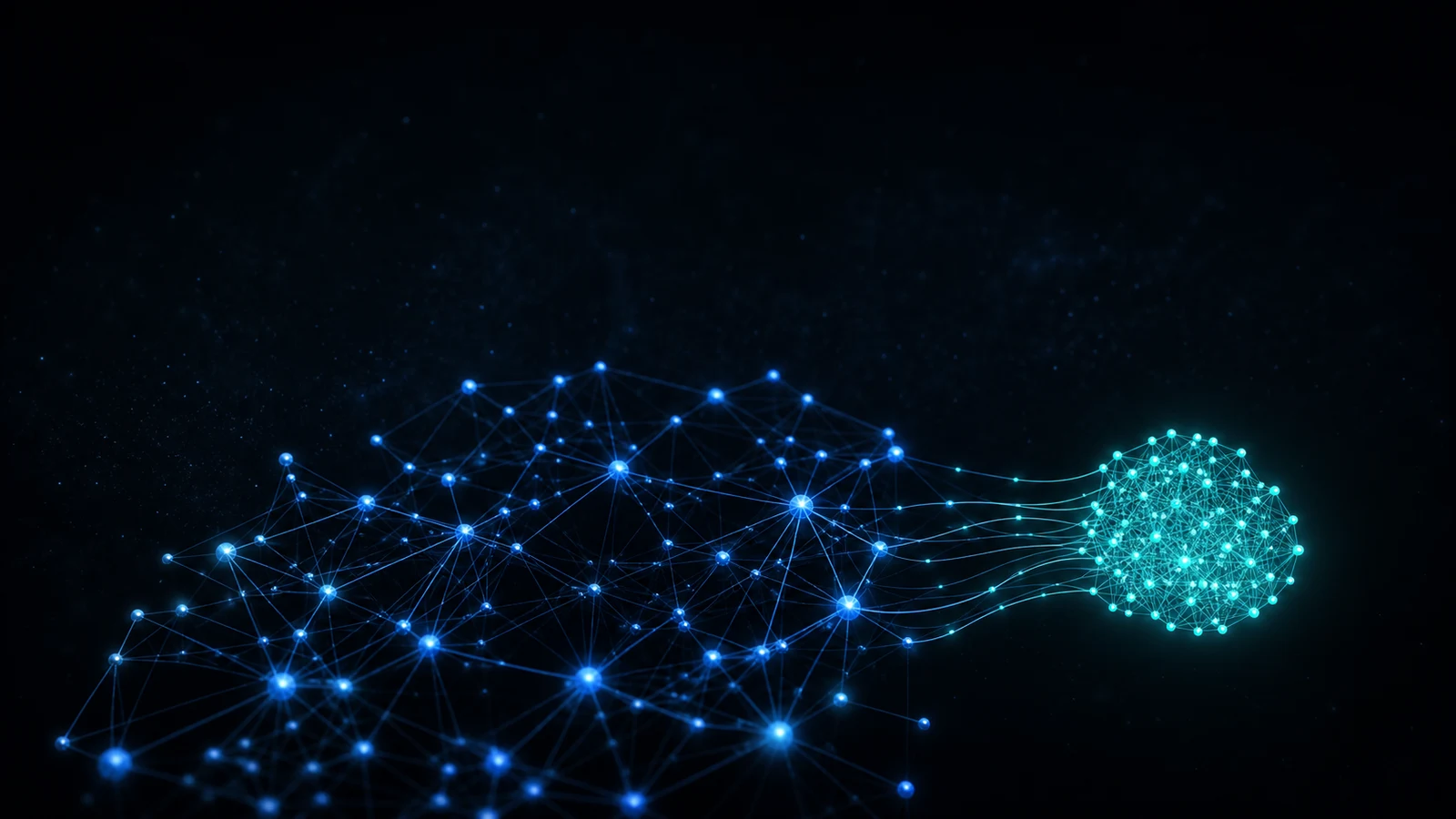
DeepSeek's Engram architecture — the March 2026 persistent-memory breakthrough
bycloud broke down Engram on Mar 24 — DeepSeek's third major architectural contribution in six months. The DualPath paper landed Feb 26; r/LocalLLaMA validated it within weeks.
bycloud”s March 24, 2026 video — “DeepSeek”s Insane Architecture Breakthrough [Engram Explained]” — breaks down DeepSeek”s third major architectural contribution in six months. After Sparse Attention in December and conditional parameters in February, Engram tackles a different fundamental: persistent memory for LLMs.
The setup for the Engram paper landed a month earlier. The r/LocalLLaMA “DeepSeek released new paper: DualPath: Breaking the Storage Bandwidth Bottleneck in Agentic” thread (216 upvotes, Feb 26) covered the storage-bandwidth precursor work. By the time bycloud broke down Engram, the open-frontier community already understood DeepSeek was building toward a coordinated multi-architecture push. Engram is the memory layer; DualPath is the storage layer; Sparse Attention + conditional parameters are the inference-side wins. Together they form a more capable open-frontier substrate than any single Chinese-lab release through 2025-2026.
What Engram actually is
From bycloud”s breakdown:
- Persistent learned memory that survives across conversations / inference sessions
- Not a vector database bolted on — Engram is trained jointly with the model”s base parameters, so the memory representation is in the same latent space the model”s reasoning lives in
- Compact — Engram memory is sparse and learned, not full-precision activation cache
- Inference cost roughly unchanged vs non-Engram baseline; memory operations are folded into existing attention compute
- Demonstrated on benchmarks requiring multi-session knowledge (long-running agent workflows, multi-day customer support contexts, research assistants that need to remember earlier work)
The biological analogy bycloud uses (and DeepSeek”s paper invokes): engrams are the neuroscience term for memory traces — physical changes in neural tissue that encode learned information. DeepSeek”s Engram is the LLM-architecture equivalent: a learned memory substrate that”s native to the model rather than an external retrieval pipeline.
Why it matters more than the previous DeepSeek moves
Sparse Attention (December) and conditional parameters (February) were efficiency wins — same capability, lower compute. Engram is a capability win — things the model can now do that it fundamentally couldn”t before.
The specific unlock: agentic workflows that need to remember across sessions stop being a vector-database problem and start being a model-architecture feature. Current frontier coding agents (Claude Code, Cursor) have to rebuild context every session; RAG pipelines try to fill the gap; users still feel the “I told you this yesterday” friction. Engram-equipped models reduce that friction structurally.
The open-frontier compounding
The r/LocalLLaMA “Train MoE models 12x faster with 30% less memory” thread (430 upvotes, Feb 10) — landing two weeks before the Engram paper — captured the parallel efficiency wave. Multiple Chinese labs (DeepSeek, Qwen, Zhipu, Step) are pushing on the same axis (more capability per parameter, per FLOP, per dollar) simultaneously. Engram is one node in a network of architectural advances; the next paper will be from a different lab using overlapping techniques.
The r/LocalLLaMA “8+ hours benchmarking every MoE backend for Qwen3.5-397B NVFP4 on 4x RTX PRO 6000” thread (243 upvotes, Mar 12) is the production-side validation: the community is actually running these architecturally-advanced open-weight models on consumer-tier hardware now. When DeepSeek ships a model using Engram + Sparse Attention + conditional parameters, the community will benchmark it within days on 4x consumer GPUs and report whether the architecture claims survive production reality.
What this enables for working engineers
Three downstream patterns:
1. Multi-session agent workflows become cheaper. If you”re building agents that need persistent context (customer support, multi-session coding, research assistants), Engram-class models reduce your retrieval-engineering burden. The model handles what RAG used to handle.
2. Cost models for “agent that knows me” applications shift. Currently these applications pay for either large contexts every session or RAG infrastructure. Engram amortizes that cost into the model”s training, with marginal inference-cost overhead.
3. The “model vs tool” boundary shifts. Some work that previously required tool calls (lookup in user history, retrieve prior conversation) can happen in-model. This changes how agent frameworks are architected.
The caveat: all of this is downstream of whether Engram works at frontier scale (DeepSeek”s paper shows it works at 70B-class; the V4-or-V5 question is whether it scales to 600B+) and whether the open-weight model with Engram actually ships in a downloadable form. Both are 3-6 month questions.
Creator POV vs Reddit dissent
bycloud”s POV is appropriately technical and cautiously optimistic — Engram is a real contribution, but the production-scale validation hasn”t happened yet. His broader Q1 2026 framing (the parameters video, the DeepSeek Open Source Week breakdown) treats DeepSeek as the leading open-frontier lab consistently shipping architectural research rather than just open weights.
The Reddit dissent through Q1 2026 clusters productively:
The “DeepSeek is winning the open frontier” camp — supported by the actual research output. Three architectural contributions in six months is a serious pace.
The “benchmarks vs production” camp — appropriately skeptical. The community wants to see Engram-equipped models running at scale on real workloads, not just paper results.
The “Western labs aren”t standing still” camp — counter to the “DeepSeek is winning” narrative. OpenAI, Anthropic, and Google have unpublished research; the visible gap may not be the real gap. Valid point; doesn”t change that the visible open-frontier momentum is real.
The “agent memory is mostly a UX problem, not an architecture problem” camp — minority but pointed. Current vector-DB-based memory works fine; the gain from in-model memory is incremental, not categorical. Reasonable take; the answer is “it depends on the workload.”
What this means for working engineers in late March 2026
Three practical positions:
1. Keep DeepSeek models in your evaluation rotation. Whether Engram ships in the next DeepSeek release or the one after, the cost-per-capability trajectory continues to favor adoption.
2. Don”t rebuild agent memory architectures around Engram speculation. The paper is interesting; the production-ready model is months away; current vector-DB approaches still work.
3. Watch for the joint release. When DeepSeek V4 or V5 ships using the full architecture stack (Sparse Attention + conditional parameters + Engram + DualPath), that”s the inflection moment for re-evaluating multi-session agent workloads.
The honest critique
What this story doesn”t mean:
- Engram isn”t a solved problem. Training-time challenges, knowledge update / forgetting dynamics, memory-capacity ceilings — all open questions in the paper.
- Persistent memory isn”t magic. Models that remember can also remember wrong things, develop accumulated biases, drift in ways harder to correct than stateless models.
- DeepSeek isn”t guaranteed to ship. Multiple architectural papers don”t always become production models. The execution risk is real.
For most working engineers reading this in late March 2026: DeepSeek”s Engram is the leading architectural-research signal of Q1 2026, part of a broader open-frontier compounding pattern that”s reshaping the cost-per-capability curve faster than Western-lab marketing would have you believe. Whether it specifically lands in production-ready form is a 2026-2027 question; the broader trajectory is increasingly clear.
For the broader context, see our DeepSeek V3.2 Sparse Attention coverage, DeepSeek conditional parameters analysis, and the Meituan / LongCat Chinese trifecta analysis for the broader Chinese open-frontier ecosystem.
Sources
Every reference behind this piece. If we make a claim, it's because at least one of these said so — or we lived it ourselves.
- YouTube bycloud — "DeepSeek's Insane Architecture Breakthrough [Engram Explained]" — bycloud
- YouTube bycloud — "DeepSeek V3.2 Just Broke SoTA Again… But How?" (V3.2 Sparse Attention) — bycloud
- YouTube bycloud — "Why can't LLMs just LEARN the context window?" — bycloud
- YouTube bycloud — "DeepSeek Just Added Parameters Where There Were None" — bycloud
- YouTube bycloud — "What DeepSeek's Open Source Week Means For AI" — bycloud
- Docs DeepSeek model releases on Hugging Face — DeepSeek
- Blog r/LocalLLaMA — "DeepSeek released new paper: DualPath: Breaking the Storage Bandwidth Bottleneck in Agentic [workloads]" (216 upvotes) — r/LocalLLaMA
- Blog r/LocalLLaMA — "Train MoE models 12x faster with 30% less memory" (430 upvotes) — r/LocalLLaMA
- Blog r/LocalLLaMA — "8+ hours benchmarking every MoE backend for Qwen3.5-397B NVFP4" (243 upvotes) — r/LocalLLaMA
- Firsthand Six months tracking DeepSeek architectural innovations and their downstream open-frontier impact